

Zinc
The one mineral you can count on seeing. It anchors the mineral block on a general men's multi, and its position near the top of that block tells you the label was written for broad daily use.
 Sumber Pria
Natural supplements for men
Sumber Pria
Natural supplements for men
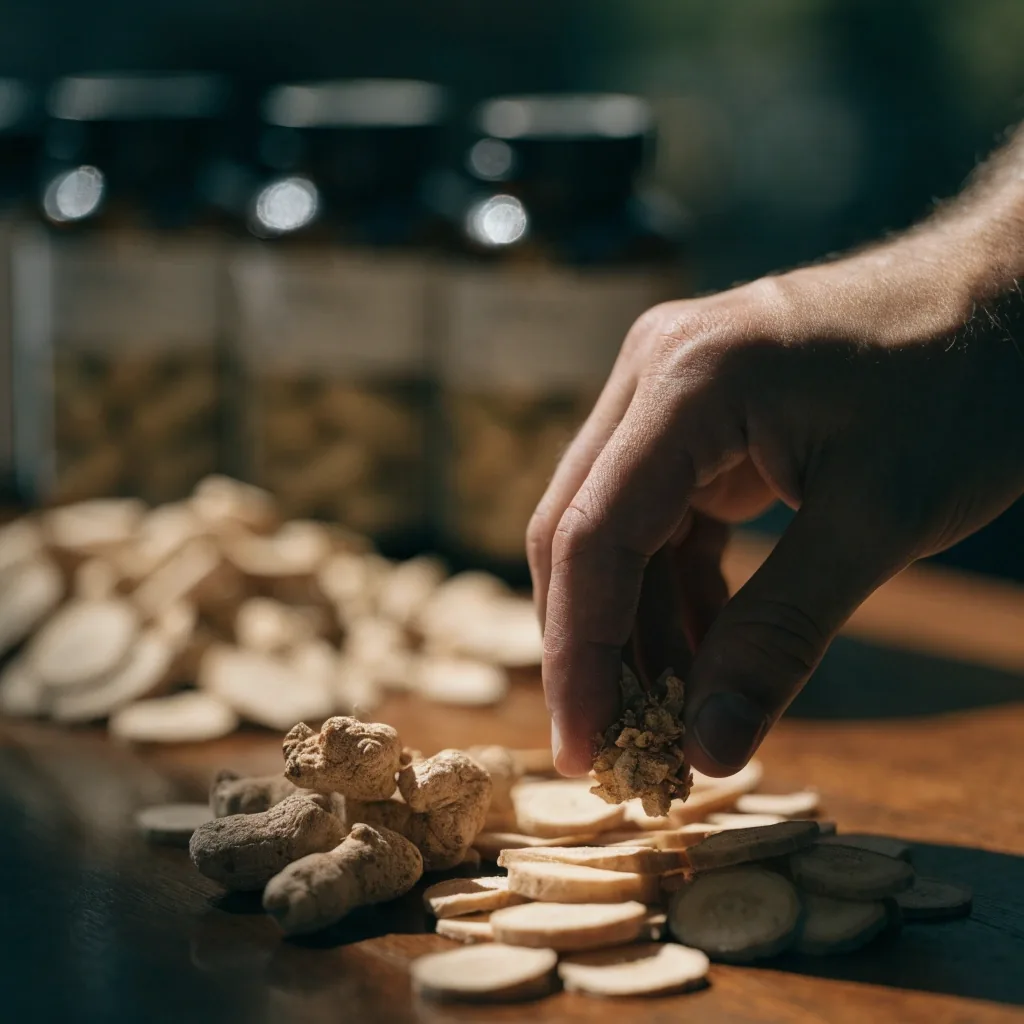
A label-reading guide

A men's multivitamin looks simple from the outside: one bottle, one daily capsule, broad coverage. The label is where it gets complicated. This guide walks through what typically goes into a men's vitamin and mineral formula, how the ingredients differ from a herbal capsule, and what to check before you commit to a bottle.
Everything below is written for reading at the shelf — the four walls of a label, the arithmetic of a serving size, and the handful of questions that separate a useful daily routine from a drawer of half-finished bottles.
Daily multivitamins for men are designed as broad, low-dose coverage. The idea is to fill small gaps in a normal diet rather than deliver large amounts of any single nutrient. That is why the ingredient list runs long and the amounts per nutrient stay modest.
Products in this category usually ask for one or two capsules a day, and the format is deliberately boring: it is meant to be a background habit, not an event.
Coverage
The ingredient block reads like an inventory because the job is breadth, not depth.
Format
A daily routine works when it is unremarkable. Small, repeatable, easy to remember.
Fit
It sits alongside food. If your diet is varied and consistent, the gap it fills may be small.
Zinc is the mineral most men's formulas include, and it appears in nearly every general multi on the Indonesian shelf. Vitamin B6 shows up almost as often, usually alongside other B vitamins in a group. Magnesium and selenium are common additions. These are not exotic ingredients, and that is the point: a men's vitamin formula is built from well-known micronutrients rather than rare botanicals. When you read a label, the mineral block is usually the easiest part to verify.
The one mineral you can count on seeing. It anchors the mineral block on a general men's multi, and its position near the top of that block tells you the label was written for broad daily use.
Almost as common, and almost never alone — B6 travels with the rest of the B group, so look for a small cluster rather than a single line.
Common additions that round out the mineral block. Worth checking only after you have settled the questions that matter more: serving size, capsule count, and what the product is actually for.
Some products describe themselves as whole food multivitamins, which usually means the nutrients are paired with food-based sources or food concentrates. Naturelo One Daily Multivitamin for Men, sold by Naturelo Indonesia, is positioned this way and marketed as vegan-friendly and plant-based, available in 60-capsule and 120-capsule versions.
Other brands use standard nutrient forms and say so plainly. Neither approach is automatically better for you. What matters is whether the label tells you clearly what you are taking and how often.
Check first
Does the label name the form of each nutrient, or only the nutrient?
Check second
Is the capsule shell plant-based, or is that detail left out?
Check third
How many capsules does one serving actually require?

Whole food multi · capsule
Nutrients paired with food-based sources. Sold as a daily multi in 60- and 120-capsule formats, with the plant-based positioning stated on the product itself.
The useful comparison is not which name sounds more natural. It is whether the label tells you the form of each nutrient, whether the shell fits how you eat, and whether the capsule count matches the routine you will actually keep.

A herbal men's capsule leads with a plant. GNC Men's Horny Goat Weed is a 60-capsule botanical supplement built around horny goat weed as its headline ingredient. Natures Health Maca belongs to the same cluster, with maca as the recurring name. These products are narrower than a multivitamin by design. They are not trying to cover your micronutrient gaps. Once you see that difference, the two categories stop looking interchangeable on the shelf.
Herbal capsule
Narrow by design. You are choosing a single botanical, not a wide spread of micronutrients, and the label should make that obvious in the first line.
Daily multi
A long list with modest amounts per line. If one ingredient is being used to sell the bottle, look again at what the other lines are doing.
This is the most practical line on any label. A 60-capsule bottle sounds generous until you read that a serving is two capsules, which makes it a one-month supply. A 120-capsule bottle at one capsule daily lasts about four months. Before comparing prices, compare serving sizes. The same arithmetic applies to every product in this category, and getting it right once will change how you shop.
| Bottle | Serving | Lasts about |
|---|---|---|
| 60 capsules | Two capsules daily | One month |
| 120 capsules | One capsule daily | About four months |
| 120 capsules | Two capsules daily | About two months |
Serving sizes are read from each product's own label. Numbers shown here are worked examples, not claims about any particular bottle.
No label tells you whether a formula suits your diet, your training load, or your daily schedule. That judgment is yours, and it is the part most beginners skip. An active man who trains several times a week may get more from the active-lifestyle segment, such as GNC Mega Men Sport, described in local authorized channels as a multivitamin and mineral supplement for active men. Someone eating a varied diet may need nothing beyond a basic multi, or nothing at all.
If you train several times a week
Multi and mineral products built for active men are the segment to compare against a general daily multi. The useful question is not which bottle looks stronger — it is which format your week can actually hold, and whether the ingredient list matches the food you already eat.
Read the energy formula guideIf you eat a varied diet
Or nothing at all, which is a real answer. Reaching for the widest formula on the shelf is not the same as reaching for the right one.
If you are unsure how a product fits your own routine, ask a qualified professional before you start it.
Plant-based formulas are no longer a niche corner of the men's shelf. Vegan-friendly capsule options exist in the daily multivitamin segment, and botanical products are plant-derived by definition. If your diet leans plant-based, capsule composition is worth a look, since some products use gelatin shells while others do not. The Naturelo line is one local example where the plant-based positioning is stated directly on the product.
Capsule shell
The one line that decides whether a daily multi fits a plant-based diet. Many labels state it directly; when they do not, that silence is worth noticing.
Botanicals
A botanical capsule is plant-based by definition. What still varies is the shell, the serving size, and what the plant is intended for.
Bottle sizes
The two sizes most of this segment is sold in. Match the count to the serving size before you decide which is the better buy for you.
Pick the category first: broad daily coverage or a focused botanical formula. Then check serving size, capsule count, and whether the ingredient list matches what you actually want. Two products with similar names can sit in completely different categories.
Compare popular productsRead the first ingredient line. A multivitamin opens with a long list of vitamins and minerals in modest amounts; a botanical capsule leads with a single plant name. If the front of the bottle promises wide coverage but the list opens with one herb, the product is in the narrower category.
Category · format
Only if the serving is one capsule and the bottle holds about thirty. Plenty of men's multis ask for two capsules a day, which turns a 60-capsule bottle into a single month and a 120-capsule bottle into roughly two. Read the serving line first, then divide.
Serving · bottle
Not automatically. Whole food positioning tells you how the nutrients are paired, not whether the product suits you. Both approaches can be labelled clearly or vaguely. What matters is whether you can read the form of each nutrient and the serving size without guesswork.
Ingredients · sourcing
Look for the minerals that recur in this category — zinc first, then B6 with the rest of the B group, and usually magnesium or selenium. The block is short and the names are familiar, which makes it the fastest part of a label to verify against what you set out to buy.
Minerals · label
Our popular products overview breaks the men's shelf down by format and ingredient — what each product is, how many capsules a serving takes, and which category it belongs to. Start there, then come back to the label with better questions.